Search results for: photography tips solutions what are fstops
About 14 filtered results
by Mathew Malwitz · Posted
We’ve all tried to photograph something up close. This small-scale world fascinates us all, whether it be a stunning flower or a bumble bee crawling about, but our cameras can’t seem to focus as close as we want. So, what is a struggling photographer to do?
There are several ways to do close-up, or "macro" photography, but the

by Allan Weitz · Posted
Though there aren’t any hard rules on the subject—and all rules are made to be broken—wide-angle and ultra-wide-angle lenses are often considered to be the go-to lenses for landscape photography. It’s not like you can’t capture wonderful landscapes with normal or telephoto lenses (you absolutely can), but due to their broad capture angles, wide- and ultra-wide-angle lenses usually win out over the alternative choices. For those who wish to go wider than ultra-wide, you have to turn to fisheye lenses.
Photographs © Allan Weitz 2020
What Is a

by John Harris · Posted
Bokeh is a word that carries a lot of weight in modern photography circles and can, surprisingly, breed heated conversations, but what does it really mean and how does it apply to portrait photography? As an introduction, consider the word—which is derived from the Japanese term for “blur” or “haze”—to mean the aesthetic quality of the out-of-focus parts of an image surrounding an in-focus subject. It is not simply something not in focus, it is a product of shallow depth of field and can be quite beautiful on its own, but also lends to

by Jill Waterman · Posted
Each autumn, as the days get shorter and the weather cools, chlorophyll production slows in hardwood trees and bushes, causing leaves to lose the vibrant green of summer. As these conditions overtake the map, nature puts on a brilliant show of color in many parts of the United States. The changing of the leaves follows a rough pathway from north to south, starting in early September and often lasting into November in southern locales.
Above photograph: Colorado Gold, Maroon Bells Scenic Area © Bryan Carnathan
Fall foliage season is a big draw

by Bjorn Petersen · Posted
Despite photography taking mainly a digital form nowadays, there is still immense value in the tactile side of photography, especially in regard to teaching photography. With education being based more in the home at the moment, it can be the perfect time to introduce someone to photography using the simplest and most basic tools. Pinholes are of the most primitive examples of photography but are also some of the most perfect tools with which to teach the basics of exposure without needing to complicate it using abstract modes, shutter speeds,

by John Harris · Posted
I love spending time with my kids, lots and lots of time. And while we are passing all of this time together, I thought I’d have a try at teaching them a little bit about photography. I don’t go into this endeavor with any illusions; they are probably going to end up teaching me.
My kids were both born well after the year 2000 and, I’d argue, that alone puts their visual acumen far ahead of what mine was at their age. Their understanding of photography as a language and their consideration of what can happen inside a frame is much more

by Allan Weitz · Posted
Close-ups taken with wider-angle lenses also expose subtle detail, but by framing your subject in its surroundings, you also create a narrative to go along with the visual detail. “Normal” macro photographs expose detail, ultra-wide-angle close-ups tell stories.
Macro photography is fascinating in the way it enables us to focus on the kind of subtle details we seldom notice otherwise. Sometimes the most mundane subjects can become fascinating when viewed at life size or greater.
Photographs © Allan Weitz

by Todd Vorenkamp · Posted
There is something magical about creating an image from a tiny amount of light that traveled through the smallest of holes—regardless of whether the image is captured on film or on a modern digital camera sensor. Pinhole photography is, arguably, the purest form of the art and, if you can mentally handle the fact that you are embarking on a voyage that runs counter to all of your wide-aperture-super-expensive-no-digital-noise digital aspirations, it is a

by David Adler · Posted
As someone prone to discussing video gear with just about anyone willing to engage in related conversation, one topic that is frequently brought up to me is the price and purpose of professional video gear and the seeming price disparity, in contrast to consumer or prosumer gear. In this installment of pro gear discussions, I will delve into what separates professional cinema lenses from their prosumer and consumer ilk.
Questions that I used to get while I worked in equipment rentals would commonly include, “Why do these cinema lenses cost so

by Todd Vorenkamp · Posted
Aperture is the size of the opening in the lens. Some lenses have fixed apertures, but most photographic lenses have variable apertures to control the amount of light entering the lens. This aperture is regulated by a diaphragm made of overlapping blades that can be adjusted to vary the size of the opening through which light passes. The size of the opening also has a secondary effect on the photograph, as the diaphragm also changes the angle at which the light passes through the lens. We will discuss two "side effects" of changing the
by Peter Ward · Posted
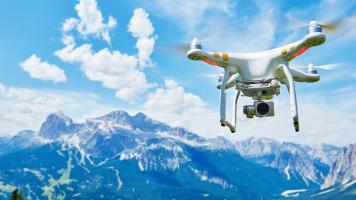
In these days of digital post production, filters are often overlooked as an image-control tool. But there are times when filters can be extremely useful, especially when capturing images from a drone. Common filters available for done cameras include UV, which are typically used as “protective filters,” neutral density filters (ND), which reduce light levels, and circular polarizer filters (CP), which reduce glare and have other properties. Unlike typical screw-on camera filters, filters for drones, in many cases, need to be made for the

by Allan Weitz · Posted
Sometimes, the phrases, acronyms and strings of numbers or number-letter combinations used to identify photographic hardware or techniques can be daunting to the uninitiated neophyte photographer.
We've prepared a list of the basic terms. Have we left any out that you think should be added? Please let us know!
0-9 | A | B | C | D | E | F | G | H | I |
by Justin Dise · Posted
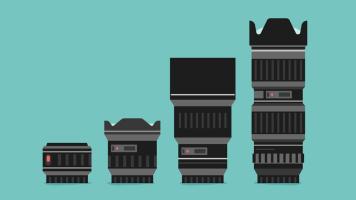
Whether you’re assembling a personal lens kit or compiling the equipment-rental list for your next film, selecting a lens package is an important decision. It can also be a daunting one, especially if you’re new to the game. So what lenses should you get? A complete set of primes? A couple of zooms? Both? The answers aren’t always clear. Ask ten DPs what their favorite lenses and focal lengths are, and you’ll likely get about as many answers.
The fact is that everyone has his or her own preferences, from focal length to build quality, to a

by John Harris · Posted
So, you just bought your first DSLR camera and you are interested in joining the ranks of image-makers everywhere who find pleasure and creativity in documenting the world as they see it. What are you gonna do now? Do you know how to set your aperture? Or what ISO is? Did you know that DSLR stands for Digital Single Lens Reflex? It doesn’t matter: what you do know is that you’re ready to step up from your point-and-shoot camera and create images over which you have more control.
A digital SLR camera is a great machine that allows you to