Bolt

The best on-camera flash is more powerful, offers greater control, and facilitates more artistic and creative approaches to lighting than your standard built-in camera flash. No wonder the on-camera flash, or strobe, is one of the most indispensable accessories a photographer can buy.
But how do you know which flash is right for you? If you own a camera from a big-name manufacturer (e.g., Canon or Nikon), should you buy a flash from them?

One of the most effective ways to improve your portraiture is by controlling the light, and one of the most effective ways to control your light is to move it. Seems like a simple enough concept, but it can be daunting at first, especially if you're using a speedlight or an on-camera flash. Despite its misleading name, an on-camera flash can, very easily, be used off the camera. The "on-camera" part simply refers to its form factor

Despite several semi-successful attempts at purging my archive of more than four decades of color slides and negatives, I still have a good number of analog images I need to digitize and archive. After completing this process, except for maybe 10% of my very, very best negatives and slides, I plan on bagging the lot and hauling it off to a nearby shredding center.
I parted with my darkroom long ago. I’ve since had a few spins around the block with a succession of film and flatbed scanners, but these days the only way I can view film images is

Congratulations! You have just acquired your very first flash. Now comes the fun part: figuring out what all those buttons do in order to get the most out of your new speedlight.
Shutter Speed (Almost) Doesn’t Matter
One thing that will trip many flash beginners up is that shutter speed gets weird. If the flash is too strong, no amount of shutter speed adjustment is going to change how it appears in your final image. A flash will provide a

Macro photographs enable you to capture in-your-face close-ups of flowers, bugs, peeling paint, and—depending on your personal aesthetics—anything encrusted in rust. The following are 10 gift ideas designed to help you with tight close-ups of objects, rusty or otherwise.
1. Macro Lenses
Macro lenses are specifically designed to capture sharp close-up photographs. Available in
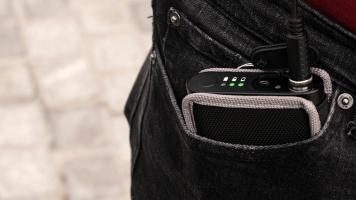
No photographer wants to miss a great shot while waiting on a recycling flash. Bolt’s Cyclone PocketMax Compact Power Pack is designed to save you from the frustration of underexposing a critical moment when shooting an event or trying to capture a fast-moving subject. This 5200mAh lithium-ion battery pack is compatible with select Canon, Nikon, Sony, Nissin, and Bolt flashes, making it an appealing option for photographers who shoot across
Camera accessories: not only can they be entirely practical for the types of photography you enjoy, they can also give your camera a unique look and feel, while boosting performance. Fujifilm’s nice lineup of accessories, and an array of third-party accessories, allow Fujifilm photographers to get the most out of their camera systems, and are great gift ideas for the Fujifilm shooters in your life.
Grips
If you grew up in the days of film cameras, before cameras

Getting the most out of your camera and lens often means having to go beyond the limitations of these basic, though very essential components. Regardless of your choice of camera systems, be it DSLR or mirrorless, there are many accessories designed to up your game as a photographer, and maybe even enhance your photographic experience.
If your camera system of choice is a Micro Four Thirds (MFT) from Panasonic or
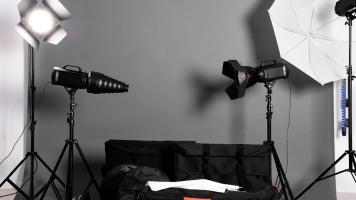
Everyone who has ever lugged around heavy gear has a soft spot for the breakdown studio. They all have in common the barest you'll need to get the job done, are fast to set up and break down, and are lightweight. Of course, there are choices to be made—flash or constant light, for instance. Flash has the benefit of stopping action, while constant sources allow you to see exactly what you'll get in the finished product. Constant light sources include tungsten-halogen (hot lights) that live up to their name, fluorescent, and the current

Wedding photography has become an extremely popular and lucrative specialty. First and foremost, a wedding is a grand, unrepeatable, emotionally charged event at which expectations run high, and second best won’t do. Being a wedding photographer requires dedication and talent, but having the right equipment is crucial if you expect to achieve sharp, well-composed, well-lit images that depict people at their best. Here’s a basic rundown of what you’ll need to take your wedding photography to new dimensions, or to fill in the gaps in your

After posing for a few gigabytes of formals in a hall, you can sense the wedding party’s palpable relief when, weather permitting, it’s time to take it outside. If you’re lucky enough to have nicely landscaped grounds, it’s a great opportunity to stop fighting with the tungsten light sources inside and take advantage of that flash-friendly sunlight.
Whether you’re just starting out as a wedding photographer or a friend asked you to shoot his or her wedding or you’re a seasoned professional, you’ll need some kind of help to maximize your