Matthews

For decades, classic three-point lighting has been the conventional approach to lighting most sit-down interviews in film and TV. While this type of lighting looks nice, it can feel stale at times. By mixing up the lights you use and how you place them, you can shake up your cinematography game and shoot visually dynamic interviews that keep viewers engaged. In this article we’ll explore three unique ways to light your interview subjects, so they pop

Welcome to Filmmaking 101, where we offer some tips on how to go about creating your movie masterpiece. Read on to discover suggestions for your pre-production, production, and post-production phases.
Pre-Production
Scriptwriting
You have your idea for an arthouse masterpiece or an action-based blockbuster; now how do you translate that into a script―the backbone of your production? You can use MS Word, Google Docs, or another document program. But using dedicated screenwriting software provides the standard formatting, outline tools,

by Robert Sansivero ·Posted
Now that we have a handle on using natural light for food photography, it’s time to move on to continuous light sources. When natural light isn’t available, or you want more specific control and placement of your light, you’ll have to use your own sources.
Natural light setup from Part

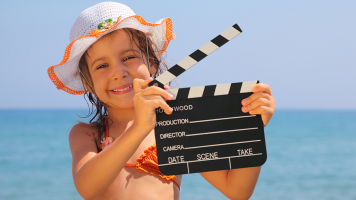
It might seem easy these days to go shoot on a beach. I mean, you could just throw an action camera into a protective case and all is good. Perhaps that works—for some shoots.
And if that is all you need, then more power to you. However, I’ve done a few shoots on beaches, and my experience is that the beach can be one of the most difficult environments in which to shoot. From getting the look you want, to protecting your gear from sand and salt spray, a little bit of planning can make a huge difference.
The Look of Your Shoot
On a sunny day

Grip, electric, swing, and “best boy”... who are these people and what is it that they do on a TV or film set? In this follow-up to my article Who Does What on the Camera Crew?, I outline the duties of some movie and TV crew positions that are not part of the camera crew but are nonetheless essential to the process of cinematography.
Above Image: Electric adjusting light
These on-set crew positions are given as a general outline, not a

A persistent challenge photographers face when working in-studio is avoiding monotony. This can be especially difficult when shooting in the same space with the same tools and the same props over and over. One way of keeping your studio work fresh is by customizing the equipment with which you are working. This article covers a handful of do-it-yourself projects that can add a little extra character to your studio without requiring a large budget or extensive building experience.
Paint or Stain Your Apple Boxes
Are you tired of providing free

Mastering studio lighting can feel like a Herculean feat when you’re just getting started. Like any aspect of photography, it requires patience, practice, and plenty of mistakes before it comes naturally. In an effort to shorten your learning curve, we’ve rounded up 10 common issues that beginners encounter and how to fix them.
Technical Issues
Lighting setups can be as simple or complicated as your heart desires—or your shot requires. However, before you can begin to think about how to use your lights creatively, you need to understand how

Lighting is one of the most important tools a photographer can have, which is why lighting accessories can make excellent gifts for photographers of all skill levels. But if you’re a new photographer or giving a gift to one, knowing what to get can be difficult. We have assembled a list of lighting gifts we'd recommend, especially for newbies, so you can hone your lighting skills with some of our favorite introductory accessories.
The Intro 2-Light Kit
Lighting kits are a great choice for new photographers because they include everything you
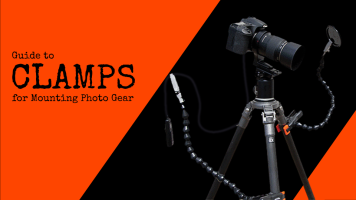
On film sets, an entire department is devoted to securing lights, modifiers, and other equipment properly. Most still photographers rarely need the level of production that filmmaking demands—however, knowing which mounting and clamping tools are best suited for a particular job can greatly simplify any photographer’s life. As a bonus, many studio clamps are more or less woodworking tools with baby pins built into their design, so stocking up can also come in handy for home improvement projects. Below is an introduction to some of the

by Lindsay Finnegan ·Posted
Are you new to food photography or looking to advance your lighting techniques? This article takes you through how to use existing light to your benefit as well as how to create it yourself. Both approaches will yield similar results, but each has its own unique advantages. It’s up to you which path to take.
Natural: Work with Window Light
The simplest way to photograph food is to shape light that already exists

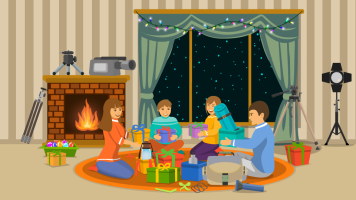
Video/film shoots can be challenging, what with 12-hour days, exterior locations in all kinds of weather, and lugging equipment to the ends of the earth and back. Here are some practical gift items to add a little comfort, both physical and mental, to your friend’s (or your own) shoot. Many of these items are not camera specific and are useful for grips, electrics, and other crew members, as well.
Gene Kelly may have been singing in the rain, but you can bet his camera crew dreaded each and every time the rain machine spouted its fake downpour

The 2018 edition of the NAB trade show has given us plenty to talk about already but, of course, there is always more gear upon which to feast our eyes. One of the notable sectors this year is lighting, with multiple manufacturers releasing equipment ranging from small accessories to full-fledged kits. The variety can seem massive, with each company expanding its own lineup in different ways, but it also means that you have more options. So, let us dive in!
Kino-Flo: The veteran lighting giant

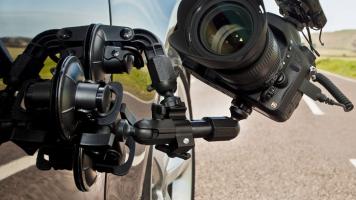
Have you ever wondered: “how did they get that shot, where was the camera attached?” Or how did the cameraperson squeeze, strap, or balance themselves into that position? B&H offers a wide range of options for mounting your video camera for vehicle-based shots, raising your camera above the fray, and otherwise mounting your camera in innovative ways.
A staple of many police procedurals is the shot of the characters riding in the squad car, whether it be the cynical detective and the raring-to-go rookie, or a reveal of the jittery perp in
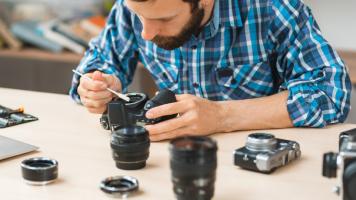
Every so often it is a good idea to sort through all your gear. With winter releasing its grip and nicer weather on the way, now is the perfect time to assess what you have and what you’ve lost, give what you have a good cleaning, and figure out what needs repair, what needs replacing, and what you should just shed. If you are a gear junkie like me, the thought of getting rid of any piece of gear probably sends you into a panic. After all, this is the gear you’ve worked hard to purchase, and perhaps you think, “So what if it isn’t shiny
Tripods are usually the first things that come to mind when we think “camera support.” The truth is there are numerous scenarios in which traditional tripods don’t cut the mustard. The following is a list of more than 20 camera supports designed to support cameras in situations where traditional tripods fall short.
The Aladdin Ball Head Clamp with ¼"-20 screw is intended for use with