Ricoh
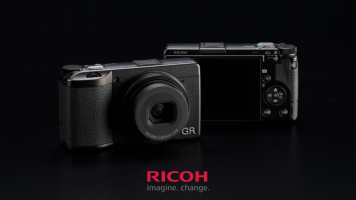
Ricoh and its beloved street-savvy point-and-shoot cameras are back. The company is announcing new iterations of its pair of compact digital street shooters: the GR III HDF and the GR IIIx HDF, which feature the addition of a new Highlight Diffusion Filter, along with a couple of other small updates, while

Ricoh Imaging has announced the HD PENTAX-FA 50mm f/1.4 and the SMC PENTAX-FA f/1.4 CLASSIC lenses, both refreshes of Pentax's SMC 50mm f/1.4 for the digital world. Building on the compact design that made the original popular, each of the new lenses offers a unique twist on the "nifty fifty" prime.

Nothing kills creativity faster than an aching back. For all the benefits of full-frame cameras, telephoto lenses, and dedicated flashes, there’s something to be said for the freedom that comes with a lightweight setup. If you’ve been hunting for a simple camera to stick in your bag on your way out the door, a traveling companion, or something discreet when photographing on the streets, then you’ve come to the right place.
Test Photographs © Rachael Leathe
The heavy-hitting cameras on this list tend to box above their weight class. They

Before ChatGPT and “AI” took over the recent technology milieu, Matterport had been helping businesses create digital twins around the globe. Hold on―that doesn’t mean the brand is cloning and uploading brainwaves to an artificial intelligence application (although we’re pretty sure Matterport would like a hand in that design); digital twins are 3D representations of a space using photos and data to create immersive walkthrough AR or VR presentations for industries like

Did you miss us? Our break was followed immediately by NAMM and NAB, and we were swamped—all the news for the week can be found on our NAB page, along with videos from the show floor. Time to get to the new stuff. Only a few weeks after the Inspire 3 was released, DJI surprised us with another major drone announcement: the Mavic 3 Pro. The Mavic
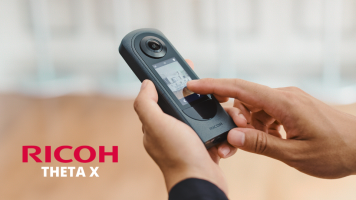
Heads up! Ricoh is releasing its newest 360-degree camera, the THETA X, along with its new custom lens cap, and this is good news for 360° capture. Already known for its THETA series of 360° cameras, Ricoh’s new THETA X brings improved image quality and user functions, making it easier than ever to shoot, view, and share your 360° video and
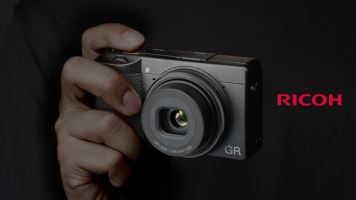
Ricoh has rolled out a sparkling new version of its popular GR camera—the Ricoh GR IIIx—featuring a new 40mm (35mm equivalent) lens and a handful of new accessories. The GR flies under the radar of most photographers, but for those in the Ricoh cult, the GR has attained an almost legendary status as one of the world’s top compact point-and-shoot cameras. If you look at the images accompanying this article, you will see that the new GR IIIx
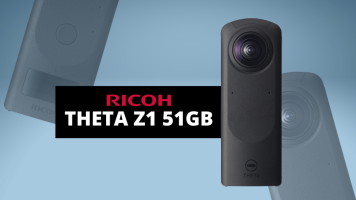
We're pleased to announce Ricoh’s THETA Z1 51GB, for 360-degree 4K videos. Based on the previous version of the THETA Z1, which had only 19GB of internal flash memory, Ricoh has increased the internal storage to 51GB while keeping the same size and weight of the previous version. Sharing the same features as the previous version, the camera is suitable for use by photo enthusiasts, panorama and street view photographers/videographers

Filtering ultra-wide-angle lenses, which are generally defined as lenses with diagonal angles of view of 90° or greater, can be challenging. And the greater the AoV, the more challenging filtering can become. The big problem has to do with vignetting, which in the case of filtering ultra-wide-angle lenses means seeing the edges of the filter in the corners of the frame.
In the case of full-frame cameras, this is seldom an issue with lenses in the 18mm to 21mm range (approximately 90° to 100° AoV) assuming you are using threaded, thin-mount

0 Plays ·Posted
On this week’s episode of the B&H Photography Podcast, we offer an insightful overview of the best cameras released in 2020 and discuss significant trends in the photography industries. Our guest is Kevin Rickert, Senior Sales Trainer for B&H Photo. Rickert is often the first person at B&H to get new cameras in his hands and is responsible for training our staff on the features of a wide variety of gear. He knows his stuff.
We start by mentioning the
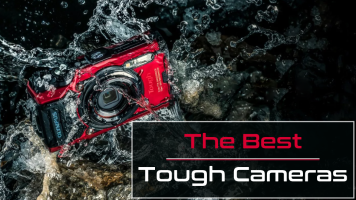
Waterproof, durable, and versatile are three of the best descriptors for the point-and-shoot cameras that are commonly known as “tough” cameras. In a camera market that has seen smartphones become our de facto compact cameras, tough cameras have filled an important niche, satisfying the needs of a range of photographers who want a stand-alone camera that can take high-quality images and be safely used underwater, while hiking or skiing or poolside. They are a great vacation camera or an everyday “don’t worry about it” camera and very useful if

Ahhhhhhhh, the hot summer sun, cool waves along the shore, sand between your toes—what’s not to love about the beach? If you are a camera, all of the above. Extreme heat, corrosive saltwater, and tiny particles can destroy a vulnerable camera faster than you can slather on sunscreen. Luckily, with a little preparation, you can safely take photographs at the beach while minimizing risk to your gear. Read on to learn how.
Tough Cameras
If you plan on making a habit of bringing a camera to the beach, your best bet is to invest in a

Camera gear protectors accomplish several goals. If you should accidentally drop or otherwise bump your camera or lens against a hard surface, depending on the particulars—including the degree and point of impact—camera protectors can minimize, if not prevent, serious damage or dents to your gear, and possibly spare you the time and expense of repairs. Depending on the product, many gear protective products offer varying degrees of added weather- and moisture proofing, which is important if you have a proclivity to photograph in inclement
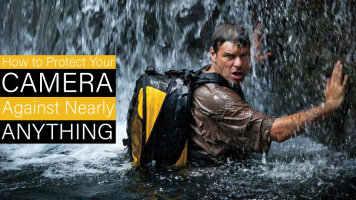
The phrase “dust and water resistant” has become so pervasive in the camera industry that it nearly comes as a given with any new camera or lens. Nobody wants to invest a considerable chunk of money on a camera only to have it melt in the rain like the Wicked Witch of the West. The same goes for dust, dirt, and sand—all of which share an unwavering attraction to camera equipment. But what does “dust and water resistant” mean? Each manufacturer has varying approaches to protecting its camera equipment depending on how it is expected to be used

Not all fathers are photographers, but for those who are, I’d argue that a point-and-shoot camera is essential tech for the dads in the world. Even for those with the latest smartphone, point-and-shoots are dedicated, purpose-built tools that excel in areas where phones can’t quite keep up. And, besides, dads love tools, right?
OM SYSTEM TG-7 Digital Camera
If Indiana Jones had a point-and-shoot digital camera, it would be the