Search results for: page about us
About 763 filtered results
by Mathew Malwitz · Posted
Through the cacophony of forest sounds, your ears home in on a buzzy, almost garbled ascending song. Perhaps you recognize it immediately, or maybe you need to confer with one of the trusty internet databases or apps. You train your eyes on the canopy, scanning for movement of any kind, when you see it: the cerulean warbler, a small rowdy songbird with wings slightly splayed from the body. Quickly, you lower your binoculars and train your camera on the little blue passerine before snapping a few frames.
The resulting photos clearly show the
by Zack Young · Posted
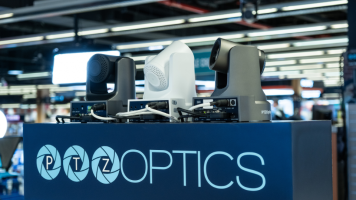
If you’re capturing a live event like a religious service, the best way to engage online viewers is by providing them with an even more dynamic view of the action than they could get in person. This is rarely achieved by throwing an iPhone on a tripod in the back of the room. Instead, we’ll show you how to use PTZ (pan tilt zoom) cameras to stream professional, high-quality versions of your events and services out to the general public. We’re breaking down the equipment, software, streaming services, and more.
Equipment Needs
On the most basic

by Mathew Malwitz · Posted
Who doesn’t love a close-up shot of a flower or bumble bee? Some of the most beautiful aspects of nature are quite small and require special tools to capture them in a meaningful way. Whether it be of a cute little insect visiting our garden, or miniature figurines you paint and sell, we need a camera that can focus close and deliver good, quality results.
Before you panic, hear us out. We don’t need to get carried away with complicated lenses and accessories, and can just enjoy yourself with a simple compact,

by Mathew Malwitz · Posted
Optic size is measured by what it can do, but when you’re new to the hobby, this can be confusing. Pick up a spotting scope or any pair of binoculars and you’ll see them adorned with a set of numbers like 8x42, 7x32, or 20-60x80. What exactly do those numbers mean and what do they tell us about an optic?
At the most

by Mathew Malwitz · Posted
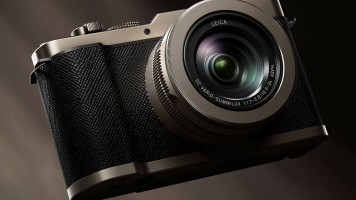
When it comes to choosing the right camera, there’s often a gap between the small, pocketable point-and-shoot cameras and larger mirrorless ones. While interchangeable lens mirrorless cameras have much to offer, their higher price points and larger form factor often make them unfeasible for the average photo enthusiast. It often leads to the question of how a photographer can bridge that gap.
Enter the aptly named
by Mathew Malwitz · Posted
After the smartphone revolution, it appeared that the days of the compact camera were done. How wrong we were. It’s true that a few years back, point-and-shoot options were few and far between. There were just a handful of options on the market, and some industry titans even left the market entirely. Despite the long-rumored demise of the compact camera, it seems that photo enthusiasts still desire a dedicated device without the distractions that come with a smartphone.
What is a compact or “point-and-shoot” camera? Just because a camera is “
by Gabby Bloch · Posted
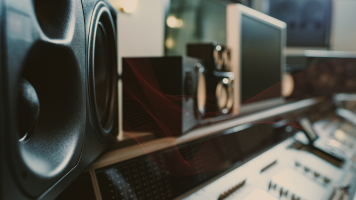
There are many factors to consider when choosing your first pair of studio monitors. And though the technical aspects of monitors can get a little complicated at times, it’s probably sufficient to understand the essentials of what a studio monitor can offer in terms of features and sound delivery. So, here’s an accessible guide to choosing the best monitors for your needs. We’ll also touch on how to best position your monitors for accuracy.
What Is a Studio Monitor?
Unlike regular speakers, which tend to have some coloration or biases in the
by Mary Latvis · Posted
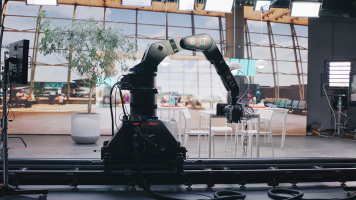
XR (Extended Reality) and VP (Virtual Production) are two terms you’ll hear used to describe professional video capture on special stages equipped with LED volume wall backgrounds. In consultation with the experts in The Studio B&H, here we review the components needed to set up an XR stage and break down some of the specifics of this VP capture technique.
Extended Reality vs. Virtual Production
XR and VP stages both use
by Mathew Malwitz · Posted
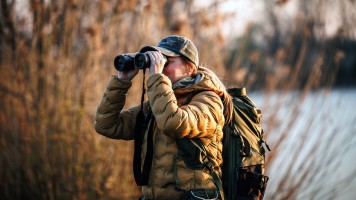
Birds, they’re all around us. If you haven’t paid much attention to them, you’re not alone. But, once you do, you’ll have a hard time stopping. If you haven’t yet dabbled in bird watching, known colloquially as birding, we have just one question. Why not? Birding is the perfect way of partially disconnecting from the digital world we find ourselves in and connecting with nature through observation, and one of the most relaxing pastimes imaginable.
If you’re fascinated by our feathery friends but don’t know where to start, we’ve got you covered

by Mathew Malwitz · Posted
Imagine, if you will, a photo shoot. Your subject is a striped, orange cat bouncing off of the walls. You have your camera raised to your brow, finger on the trigger, waiting for the perfect pose. He turns his gaze toward you, but his head is constantly moving. No matter, you quickly fire a few frames, figuring that you finally nailed the shot. You check your shots, only to see a series of blurry portraits.
If this sounds like a situation you’ve been in before, we know the feeling. That’s why, today, we’re taking a look at settings for pet

by Mathew Malwitz · Posted
Birding is, by definition, the recreational hobby of observing and identifying wild birds in their natural habitat. Finding birds is the easy part. Just go outside and stop, look, and listen, and you’ll notice our feathery friends like you’ve never seen before. But how do we identify them? We need to consider a few physical attributes of the birds, from their overall shape to the length of their tail and more.
Birds come in all sorts of elaborate shapes, sizes, and color patterns that make them stand out, or in some cases, remain hidden from

by Freddy Gerngross · Posted
The PA system is the linchpin of any venue or event space, whether it’s the hottest new night club, this weekend’s big house party, or the screening of the next indie film sensation. It’s integral to the experience of social activity—and because music and sound deserve to be clear, coherent, and exhilarating, the PA system needs to serve up the goods by being powerful, reliable, and properly scaled for the event.
In our

by Mathew Malwitz · Posted
Editing is an essential piece of the photography puzzle. We all strive to get it right in camera, but even back in the glory days of analog photography, much of the magic happened in the dark room. Today, we have even more tools at our disposal, from photo management software to programs like Adobe Photoshop where we can make drastic changes to our work.
What we consider too much in terms of editing is up to the artist and their creative vision. What matters more is being able to make the edits you wish to make in the most efficient way
by Zack Young · Posted
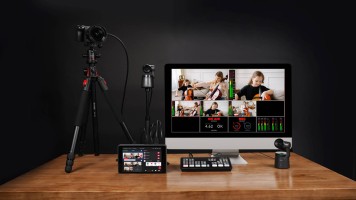
In an increasingly digital world, it’s often no longer feasible for an entire technical team to be on site for a production. But as more infrastructure moves to the cloud, physical camera hardware still often stands in the way by requiring in-person setup and fine tuning. That’s where PTZ cameras come in. With their ability to be remotely panned, tilted, and zoomed, they open up a world of possibilities for remote production. So what are the best ways to utilize them? Let’s dive in!

by Mathew Malwitz · Posted
Today, we're going to learn about practical applications of other, less common lenses for street photography such as portrait lenses, ultra wide-angle landscape lenses, and special effect glass like mirror lenses and beyond. These are by no means the only unconventional lenses out there, but these should get your gears turning and inspire you to start experimenting.
Portrait Lenses
Portrait lenses are known for their unparalleled sharpness and eye-catching, subject isolating qualities. This is thanks to their simple design, top-of-the-line