Pentax

After our short holiday break we are back with tons of news from the world of photography. Out of all the launches, nothing is bigger news than seeing the first film camera to come out of Pentax’s Film Project—the 17. This 35mm half-frame camera is designed for everyday shooters and is looking like an exciting entry into film photography. Nikon also dropped some big news with the release of the

0 Views ·Posted
Back in late 2022, Ricoh Imaging/Pentax had announced that it was working on a “new project involving the research and development of new Pentax-brand film camera products.” Today, we finally get to see the fruits of that labor: the Pentax 17. This is a brand-new 35mm half-frame film camera built using a wealth of inspiration from Pentax’s rich history of film camera development. It’s perfectly simple, elegant, and functional, just as a film camera

Nikon stayed in the news this week after its surprise announcement that it will be acquiring RED, with a major firmware update for the Z9. FUJIFILM shows there are still more ways to have analog fun with instant film with the
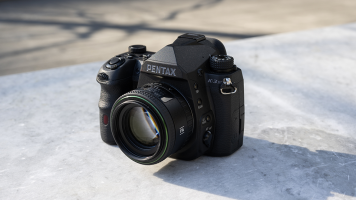
The Pentax K-3 Mark III Monochrome is one of the most surprising camera releases in recent memory. As a brand that’s already in rare air with its dedication to the DSLR, the choice to further isolate Pentax with a black-and-white-only DSLR is definitely intriguing―but also incredibly fun and refreshing. I had a chance to shoot with the camera for a little while; my immediate takeaways relate to nostalgia. It’s exciting to

My grandfather bought a Pentax P3 the week I was born. A year of tenuous exposures later, he replaced it with a more automated Pentax SF1. And so, the camera used to take the photos in this article spent the next three and a half decades in a shoebox in Pittsburgh.
During my last visit back home, my grandfather pulled me into his kitchen. “Whaduya think I can get for these?” He dropped a stack of dusty magazines, a half-evaporated snow globe, and the well-worn P3 on his kitchen table. After breaking the disappointing news that none of his

Sony ZV-1 II, Canon R100, FUJIFILM X-S20, Leica Q3, Pentax 50mm
Week of May 21, 2023
We couldn't go into Memorial Day weekend without another round of product announcements and we sure had some this week. Sony is giving one of the most popular vlogging cameras around some well-earned upgrades with the release of the ZV-1 II. FUJIFILM and Canon are upgrading their entry-level mirrorless offerings with the X-S20 and R100, respectively. Leica is even

Ricoh Imaging has announced the HD PENTAX-FA 50mm f/1.4 and the SMC PENTAX-FA f/1.4 CLASSIC lenses, both refreshes of Pentax's SMC 50mm f/1.4 for the digital world. Building on the compact design that made the original popular, each of the new lenses offers a unique twist on the "nifty fifty" prime.
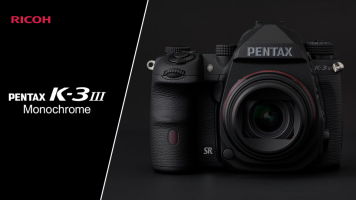
Ricoh upended the camera world this week with the announcement of its groundbreaking PENTAX K-3 III Monochrome camera. The color array (anti-aliasing filter) is stripped from the camera's custom 25.73-megapixel APS-C sensor, making it exclusively capable of taking black-and-white photos.
PENTAX K-3 III Monochrome

As we turn the corner into 2023, the emerging landscape for photography seems split between mirrorless maximalism, exemplified in the fourth-quarter releases of the FUJIFILM X-T5 and Hasselblad X2D 100C, and the triumphant resurgence of film that has culminated in Leica's re-release of its iconic M6 and an eleventh-hour announcement of an exploratory film camera project from RICOH Imaging's Pentax brand. It's more than a little strange that only two months earlier, Pentax announced its newest camera, the
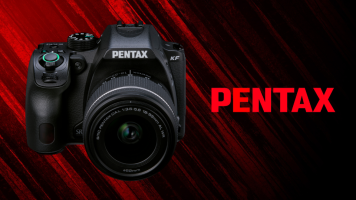
Pentax has announced the KF, a compact and lightweight APS-C format DSLR created for adventurous photographers. Featuring an articulating LCD screen, weather-resistant construction, and 24.24MP sensor, the KF marries versatility and durability, making it as useful for documenting family picnics as it is for traversing the rainforest.
Pentax KF
The

Are optical designers designing (and re-designing) lenses today to create better bokeh at the expense of optical characteristics such as diffraction spikes (popularly known as star effects/sunstars/starbursts)? Is the trend toward creating “better” bokeh sending the lens-made diffraction spike the way of pay phones, SLR cameras, manual transmissions, and the internal combustion engine?
The photography world, especially on the Internet, is full of debates. Canon vs. Nikon.

0 Plays ·Posted
A listicle is an article comprising a list.
A listicle is any piece of digital content that’s formatted as a list.
A listicle is an article comprising a list, usually with some kind of extra detail added to each item.
What we have here, then, is a podsticle.
Today on the B&H Photography Podcast, we catch up with the new photography gear that has been announced over the past few months. Attention goes to the

Join us for a B&H livestream event: "The City That Finally Sleeps: An Interview with Mark Seliger in Partnership with Sony."
Mon, 07/19/2021 - 23:00
Add to Calendar
2021-07-20 03:00:00
2021-07-20 03:00:00
The City That Finally Sleeps: An Interview with Mark Seliger in Partnership with Sony
In the grips of the COVID-19 lockdown, New York City transformed from a city known for its unrelenting energy to a ghostly display of architectural

After bonding over a mutual love for exploring and some crazy outdoor adventures during college, Berty and Emily Mandagie honed their respective photography and writing chops before starting their blog, The Mandagies, in 2016. In the past five years their eponymous brand has grown into one of the Internet’s leading Pacific Northwest travel resources, leading us to invite them onboard as our next B&H Creator of the Week.
In our conversation below, the Mandagies share their love for the Oregon coast
We’ve all tried to photograph something up close. This small-scale world fascinates us all, whether it be a stunning flower or a bumble bee crawling about, but our cameras can’t seem to focus as close as we want. So, what is a struggling photographer to do?
There are several ways to do close-up, or "macro" photography, but the