Pentax
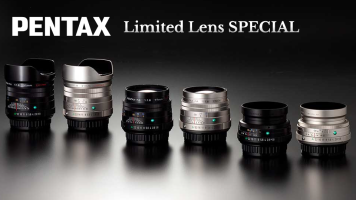
Recently announced and now in stock at B&H, three new Pentax HD Pentax-FA Limited series lenses present a versatile range of prime lenses with 31mm f/1.8 wide-angle, 43mm f/1.9 normal, and 77mm f/1.8 portrait-length designs

The In-Sight Photography Project has provided photographic instruction and camera gear to rural youth in and around Brattleboro, Vermont, since well before the dawn of digital, making it the Grande Dame of Youth Photography not-for-profits. The organization’s pay-what-you-can motto, paired with its four-tier payment system, encourages community support while also insuring that no student is turned away.
For this fourth story in our series, we spoke with In-Sight’s executive director, Victoria Heisler, and program director A. Hanus, about the

0 Plays ·Posted
On today’s episode of the B&H Photography Podcast, we welcome B&H Senior Sales Trainer Kevin Rickert back to the program to discuss the latest cameras and lenses released over the past few months. For today’s episode, we have the support of Audio-Technica and are using its
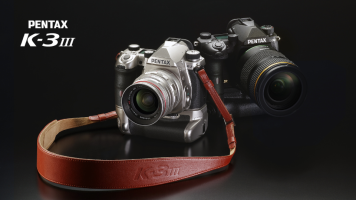
One of the things we love about Pentax is that this company wears a love for photography on its proverbial sleeve. A recent video introduction to its new flagship Pentax K-3 Mark III DSLR starts with a simple affirmation of the core Pentax principles, citing a devotion to the photographic process and the user experience that goes beyond a sheer sales pitch. It is something to be valued, and this devotion is evident in Pentax

As we begin 2021, it has been a full 13 years since the release of the Panasonic Lumix DMC-G1, almost eight years since the full-frame Sony Alpha a7 was introduced, and more than two years since Canon and Nikon announced their full-frame mirrorless cameras. In other

You’re probably aware that film has been making a comeback in recent years, but let’s be honest with ourselves. Did it ever really go away? Sure, it may have seen a dip in popularity at the dawn of the digital age, but many serious enthusiasts never stopped using it. Just ask the experts here at B&H! In fact, we asked some long-time film shooting experts here, “What’s your favorite film/camera combination and why?” Below, you’ll find their answers

Is it strange to sit back and think that buying a film camera is a new experience to many—even most—photographers? Just 20 years ago, almost everyone was buying and using film cameras. Today, there are legions of photographers who have never shot a single roll of film. Luckily for us, film photography still exists and there are both film and film cameras that you can buy with which

For a lighting company that’s only been around for just over a decade, Godox has managed to establish itself not only as a recognizable brand among on-camera, portable, and LED lighting manufacturers, but as a serious contender in a fiercely competitive marketplace. And how did the company manage to gain such a solid footing in such a short time? Easy. Godox produces exciting state-of-the-art lighting products at price points that make the competition’s bean counters queasy. The following are some of the more recent and popular Godox

Binoculars make great gifts. Regardless of who you are shopping for, or what their hobbies are, a nice pair of binoculars can be appreciated and enjoyed by just about anyone. If you think about it, almost all of us find ourselves out in the world wishing we could have a closer view of something almost every day.
Now that I have convinced you to gift a beautiful pair of binoculars, you’ll click through to the binocular section of the B&H website

Achieving accurate skin tones in photography can be a life’s journey. Even the most dedicated and technically proficient portrait photographer spends significant time lighting for skin tone and then adjusting the raw images in post-production to get the look they are after. While there is no substitute for accurate lighting or digging into a raw file to make those adjustments, most photographers do not have the skill set or even the time to dedicate to such a workflow. However, there are ways to improve skin tone imaging “in-camera,” using the

It has been more than 16 years since Lensbaby first came into being, and to mark the occasion, this manufacturer is taking the opportunity to introduce the Lensbaby Spark 2.0, which is an update of the original Lensbaby Spark 1.0, introduced in 2012.
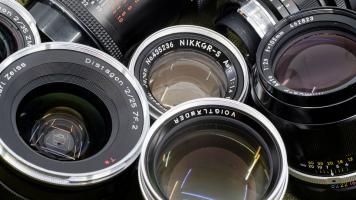
How “good” are vintage lenses when used on modern digital cameras? In a word, vintage lenses are “fine,” though I would have to immediately follow that statement by adding, “It depends,” because there are always exceptions to the rules, though even in these cases, the lens in question often works fine albeit with a technical or optical shortcoming of sorts.
Original photographs © Allan Weitz 2020
When adapting older-generation film camera lenses to DSLRs and mirrorless cameras, most perform well in terms of sharpness, color fidelity, color

There is still one basic truth about photographing sports—access is everything. If you are not near the action, you will not get a photograph. Does this mean you need a sideline pass at the Super Bowl or a family member in the NBA? No. Those are good to have, and media credentials for a Super Bowl is a professional feather in your cap, but “access” can be found in many places and many ways. A good sports photo does not even have to be on-field action, so do not let a lack of access intimidate you, but understand that to join the upper echelons

0 Plays ·Posted
On this week’s episode of the B&H Photography Podcast, we welcome Kevin Rickert, who is a camera and lighting Senior Sales Trainer for B&H. Rickert teaches and updates the Pro Photo staff on all the features and specs of new cameras and often gets these cameras in his hands well before anyone else. Could there be a better guest for this episode, in which we discuss the many recent camera and lens announcements from the major manufacturers?
Much of the chatter in new
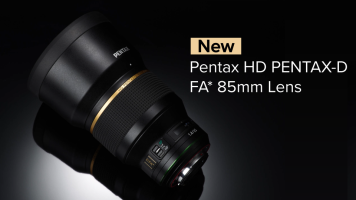
Pentax has announced the latest addition to its next-generation Star series prime lens family—the HD PENTAX-D FA* 85mm f/1.4 ED SDM AW. Designed for use with all full-frame and APS-C format, Pentax K-mount cameras, Pentax’s latest flagship prime lens features a